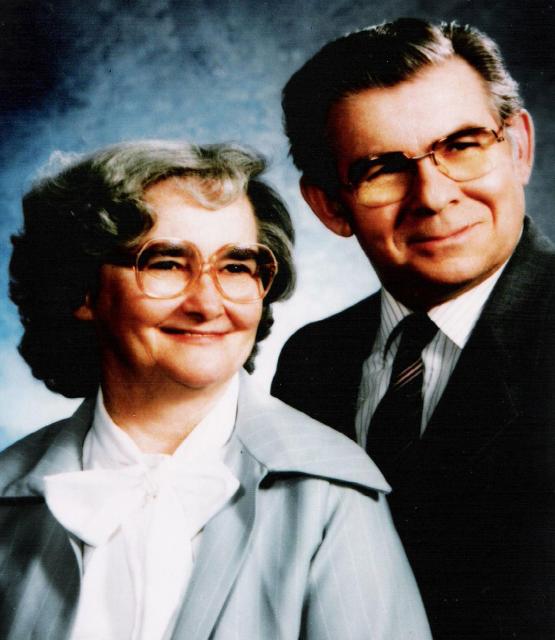
Epifanius Stepan Bilak (shortened to Epi Stephan after he came to the U.S.) was born shortly before May 13, 1926 (his legal birthday) in Kosmeren, western Ukraine. Stephan was the first child of Dimitri and Anna Derkach Bilak. His four brothers were Ivan, Vladimir, Roman and Vasyl, and a baby sister, Orysia Maria.
Early Life
In 1929 Ukraine was suffering great hardship. Stephan’s dad was a carpenter, and found work in France. By 1930, he had saved enough money to have Anna and their two sons, Stephan and Ivan, join him. They stayed in France for four years, where Stephan became fluent in French, but the family returned to Ukraine in 1933 or 1934 when things looked brighter there.
In 1938, Stephan’s dad again had to go to France in order to find work. He left, intending to do what he had done in 1930, earn enough money so the family could join him. In 1939, however, the Soviets took over Ukraine, and Stephan had to work to help feed the family. Every day after school, he worked on a collective farm. Being the oldest child, he also had responsibilities at home.
In the spring of 1942, the Nazis came to Kosmeren looking for workers for their farms in Germany. The Nazis took about 30 young people from Stephan’s area to join a train carrying hundreds of boys and girls from Ukraine and Poland. This was a cattle train, not a passenger train. The young people rode standing up, with the stench of manure coming through the straw at their feet. Like the animals that had been in the train car earlier, they were herded to their destinations.
Their journey was interrupted by long “rest stops” at two concentration camps, Auschwitz and Metz. At these camps, when the teens were ordered to march they knew to keep walking, no matter how weak they were. If they didn’t get into the lines fast enough, they were clubbed.
At each stop, they were separated and re-registered. And by the time Stephan reached his destination, he couldn’t find anyone left from his hometown. The Germans had names like “untermensch” (“under people,” or sub-humans) for Stephan and the other reluctant travelers.
Seeds Planted on a German Farm
However, God had His eye on this Ukraine teenager. Stephan was taken in by a farmer who couldn’t afford a huskier worker. The farmer’s first words were, “You will be my slave for the rest of your life.” However, this family treated Stephan well, although they were shocked by his appearance. He had worn the same clothes for two or three months–never bathing, except for being deloused at the concentration camps. What he had on was tattered and dirty.
At first, he wore the farmer’s old work clothes. Although they were too large, it felt good to have clean clothes. Stephan was surprised that the family allowed him to eat at the table with them. He had been starved for so long, that no matter how much he ate, he still felt hungry when he left the table.
The family insisted that Stephan attend the Catholic Church with them. The farmer’s wife bought him a suit and other clothing. When he asked why she did this, she told him they didn’t want to be ashamed of him when they took him to church. Their gruff words could not hide their soft hearts.
Stephan arrived on the German farm shortly before his 16th birthday. The lady baked him a cake, and they took his picture in his new clothes, so he could send it to his mother in Ukraine. Stephan exchanged letters with his mother for awhile, but soon she and Ivan, one of Stephan’s brothers, were sent to Stalin’s Gulag in Siberia. Stephan would remain on the German farm, in relative safety, for the remaining three years of the war
He would never see his mother again.
Conversion
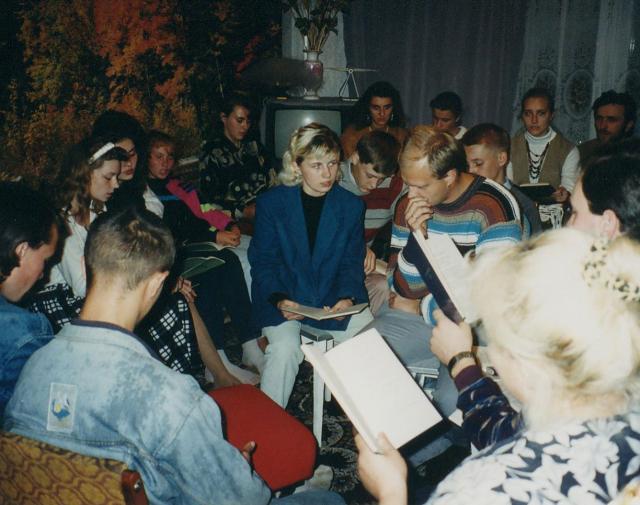
After World War II, Stephan lived in a displaced persons’ camp near Fritzlar, Germany where the refugees could work for their food and lodging. He filled various jobs from carpenter to firefighter. He also found new friends, including an older couple he came to call Papa and Mama Kolishko. They often ate together and studied the New Testament. When Papa Kolishko gave Stephan his first New Testament, he said, “Stephan, if you believe and obey what’s in this book, you will be saved.” Stephan often said, “That was the best sermon that I ever heard, and I never forgot it.”
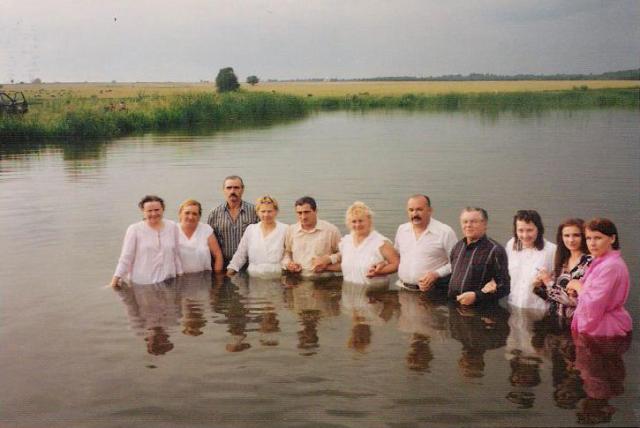
On October 1, 1946, Stephan was baptized, and he vowed to find an opening in the Iron Curtain, so that others in Slavic lands could have their own New Testaments and learn of Christ.
That didn’t happen right away. In May of 1948, Stephan joined his Dad in Northern France. For awhile they lived together and worked for the same factory. Stephan learned of the Bible Institute near Paris, France, and went there to study for the ministry. He paid his way, doing maintenance work on the campus.
On the first Sunday in January, 1951, he visited a church in Paris where Maurice Hall and Melvin Anderson were preaching. Stephan learned much from these men. They studied together and soon they asked Stephan to lead singing and to preach at times.
A Pen Pal
That year Stephan went to Frankfurt, Germany, to the annual Bible lectureship. He visited a young people’s class that was corresponding with pen pals from the United States. The teacher insisted that Stephan take a few names with him. Stephan was reluctant, but took two or three, and chose to answer the shortest letter with the prettiest stamps. That letter was from a young Tennessee lady named Reba Denny.
Stephan and Reba corresponded for three years, and their friendship was encouraged by Batsell Barrett Baxter and Maurice Hall. Brother Baxter invited Stephan to come to David Lipscomb College to study. Stephan and Reba were married on March 26, 1954, in Nashville.
While a student at David Lipscomb, Stephan began preaching at the Wheeler Hill Church of Christ in Pikeville, Tennessee. Since he was fluent in French, in 1957, the Westhill Church of Christ in Cleburne, Texas, sent the Bilaks for mission work in Montreal, Canada. A year later, the Bilaks helped establish the first Church of Christ in Plattsburgh, New York.
Radio Ministry and Benevolent Work
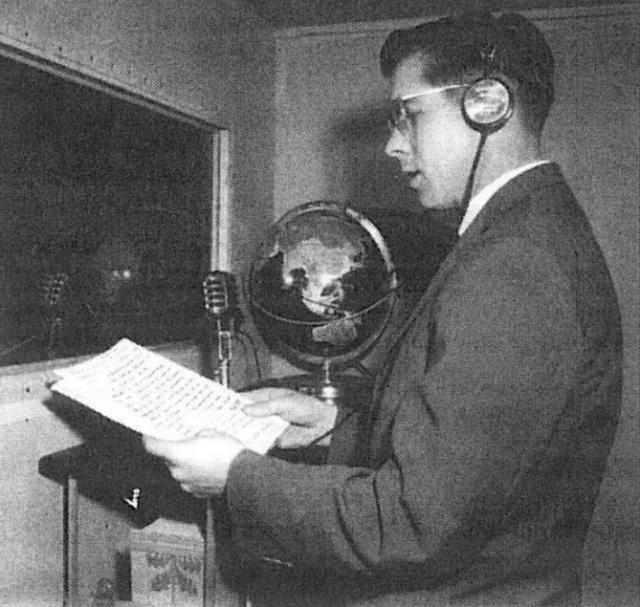
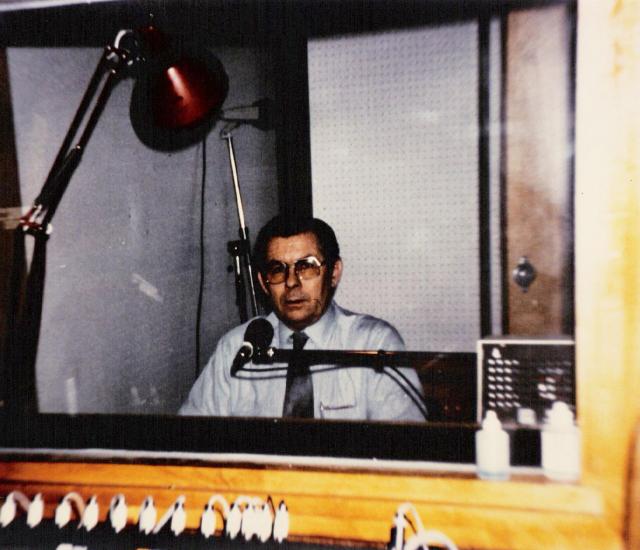
In 1959, Stephan and Reba moved to Rochester, Michigan, where they began teaching at what was then called Michigan Christian College. That year the Ukrainian broadcasts, “Messenger of Truth,” began. Stephan set up an organization called Russia for Christ, the first name for what became Slavic World for Christ. While at Rochester, Stephan–an accomplished carpenter– built their house and a recording studio, and became a United States citizen in 1960.
In 1962 he began a daily 15-minute reading of the New Testament in Ukrainian over Trans World Radio, reaching into many nations. Sometimes he would read the Scriptures very slowly, slow enough for the listeners to transcribe the words. This gave them a part of the Bible, their own handwritten scriptures.
The Rochester, Michigan, Church of Christ became the sponsoring congregation in 1965; and in 1967, Stephan and Lucien Palmer, a Rochester elder, made their first trip to visit listeners behind the Iron Curtain.
In 1969 Gene Arnold asked Stephan and Reba to come to Lausanne, Switzerland. Since Switzerland was a neutral country during the Cold War, this move made it easier for listeners to correspond with Stephan. In 1972, he began preaching for the Lausanne congregation, in addition to his Gospel broadcasts behind the Iron Curtain.
In 1974, the sponsorship of the Russia for Christ ministry was transferred from the Rochester, Michigan congregation to the Minter Lane Church of Christ in Abilene, Texas. In January, 1982, the name of the ministry was changed from RUSSIA FOR CHRIST to SLAVIC WORLD FOR CHRIST to reflect the broader scope of this effort.
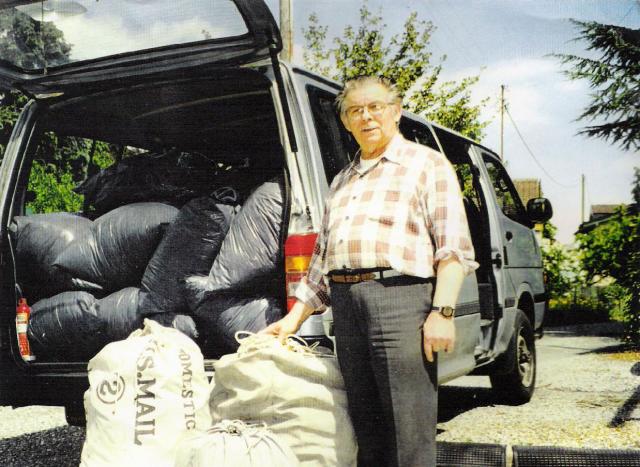
Since Stephan could not return to Ukraine (he did not return to Ukraine after WW II, so he was considered a traitor by the Soviet Union), over the next 26 years, Stephan, his family and friends, made many trips into the satellite countries of the Soviet Union, taking Bibles, printing supplies, food, clothing, medicine, medical supplies, and other items. Sometimes the forbidden contraband, such as miniature New Testaments and disassembled printing equipment, would be hidden under a false floorboard in the vehicle. God’s smugglers spent some anxious moments (or hours) waiting for the border guards to let them go.
A Native Son Returns Home
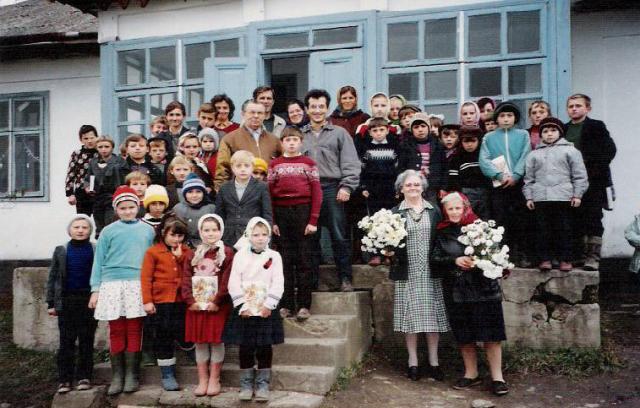
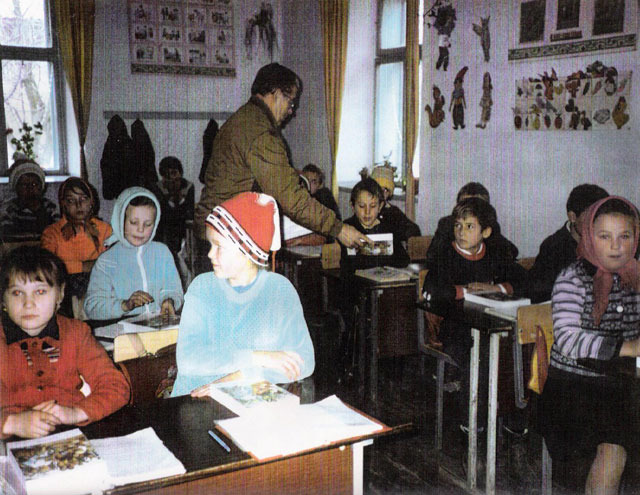
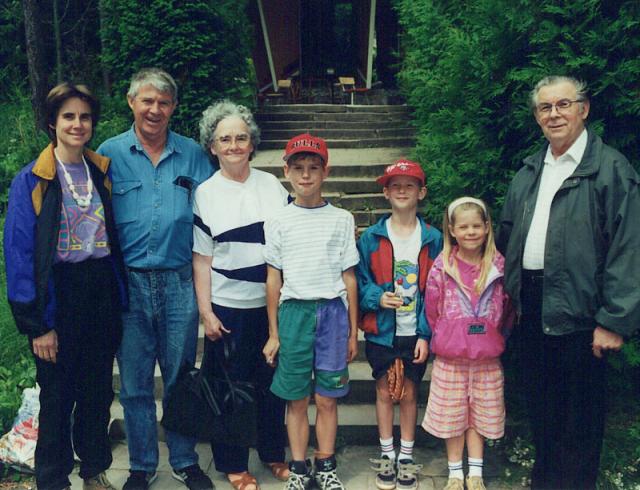
Although Stephan helped establish congregations in other Slavic nations, he was not allowed to return to Ukraine until after the fall of the Iron Curtain in December, 1989). Finally, in March, 1990, three months after the fall of the Soviet Union, Stephan, Reba and another couple flew to Kiev where he was reunited with three of his brothers and his sister after 48 years. He had corresponded with his three brothers and one sister in Ukraine, but had not seen them since the day the Nazis took him away. After that first visit, Stephen returned to Ukraine several times a year until his death in 2004. Stephan’s father and Stephan’s brother, Vladimir, had already moved to Canada, and Stephan had visited them from time to time.
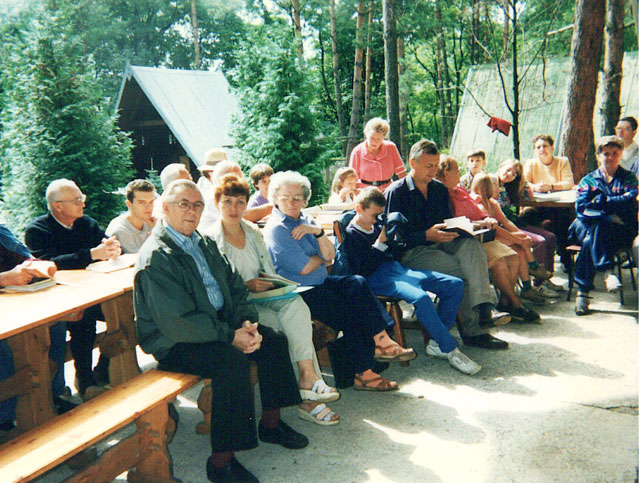
Now that he could travel into Ukraine, he cut back on the radio broadcasts and expanded the print ministry. He concentrated specifically on planting a strong congregation in Ternopil, in his home state or oblast, training church leaders who could carry on the Lord’s work after he was gone.
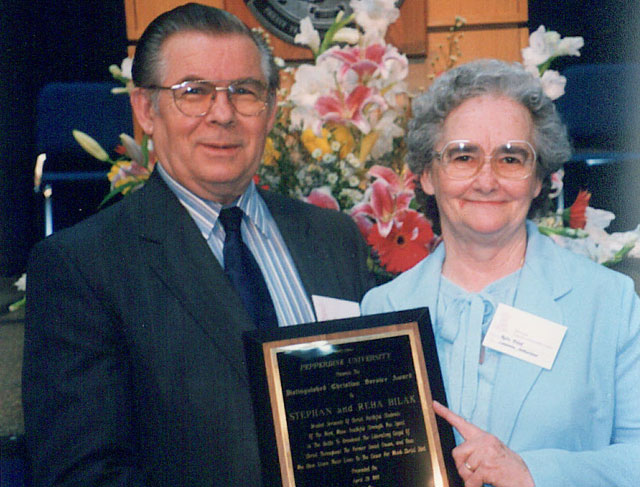
Stephan and Reba were a team. They were known for their international hospitality; and their greatest joys were their four children and grandchildren. When Reba died on February 13, 1999, people all over the world grieved with the Bilak family.
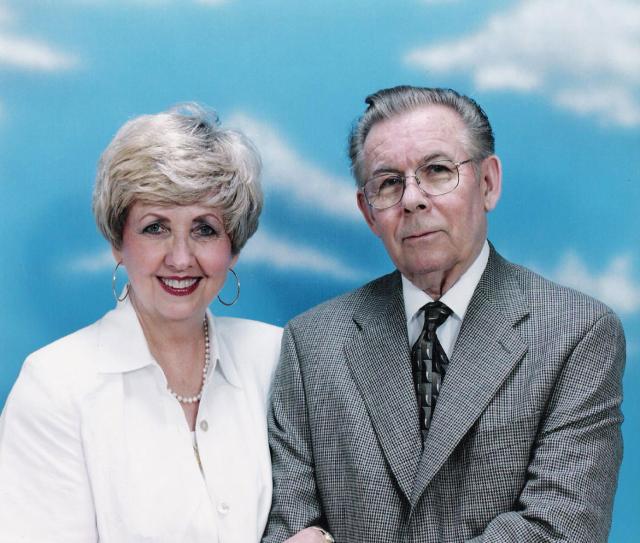
However, God still had great blessings in store for this messenger from Ukraine. A lovely lady, Carolyn Halbert Pletz, came into his life. Carolyn brought new hope and energy to this tired man of God. She encouraged him and helped him deal with the pain and the treatment during his long struggle with multiple myeloma. They continued the tradition of international hospitality, and they often traveled into Ukraine to teach and encourage the Christians.
Carried Home
In 1997, Stephan shared some thoughts about death. He wrote:
“At the age of nine or ten, I had a severe case of pneumonia, and my father had to take me to the doctor about five miles away. We walked across a bridge. On the way back, I was tired and sleepy. My father carried me home, over the bridge of turbulent waters. I never knew when we crossed the river over the bridge or when we arrived home. The next morning my mother woke me to give me the prescribed medicine, and it was good and tasty. I soon recovered. I know that when my day is over, and I am tired after working in the vineyard of the Lord, He shall gently carry me home.”
The Lord carried Stephan home on October 27, 2004.